

The English International College, an International School situated on the Costa del Sol in Marbella, has now been established for over 40 years and we feel justifiably proud of our excellent track record of examination results and prestigious university placements. We look forward to the future with optimism and enthusiasm, feeling sure that, in the Sixth Form at EIC, we can provide the right conditions that will allow each student to flourish. We are determined that every student achieves to the best of their abilities and makes life-long friendships.
Whether it is through the academic programme, cultural experiences, sporting successes, charity events, involvement in the wider school community, environmental activities or our unique Horizons programme, we aim to provide the foundations for students to realise and develop their talents and passions. These are key formative years - university is just around the corner - and it is crucial that our students begin to engage with the world around them, developing their intellectual and personal skills necessary to thrive after leaving EIC. We provide a friendly, working atmosphere within a stable structure to help the students achieve their potential.
We have high expectations for our Sixth Form, both in their approach to their studies and their attitudes towards the life of the school. The Sixth Form are the role models for our younger EIC students and they set the tone for the whole school. We require them to approach their studies in an organised and rigorous manner.
Our rigorous, rounded and relevant curriculum ensures our students are highly sought after by both universities and future employers.
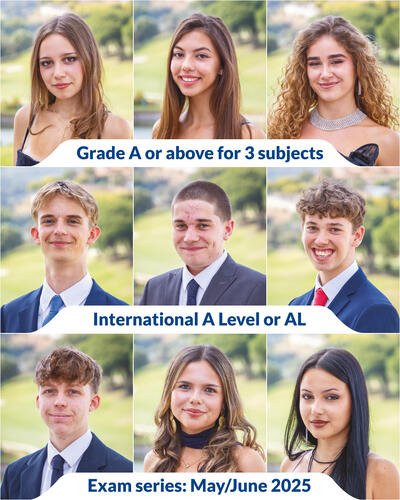
Mon Jan 26, 2026 | Sixth Form
We’re pleased to announce that nine of last year’s Year 13 students have been recognised by Pearson as…
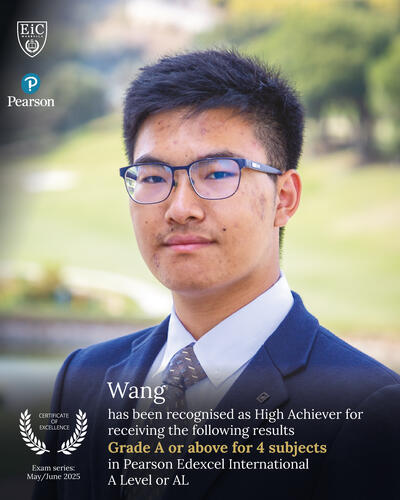
Mon Jan 19, 2026 | Sixth Form
We are delighted to announce that Wang has been recognised as a High Achiever for receiving the following…
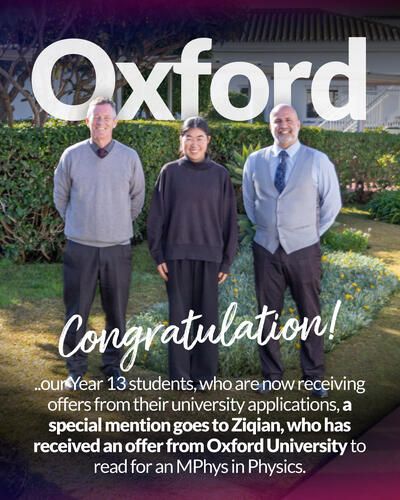
Fri Jan 16, 2026 | Sixth Form
The spring term is a busy one for our Year 13 students, who are now receiving offers from their university…

Thu Dec 18, 2025 | Sixth Form,Charity
Our hidden heroes have outdone themselves this year. Thanks to your participation and donations, we smashed…
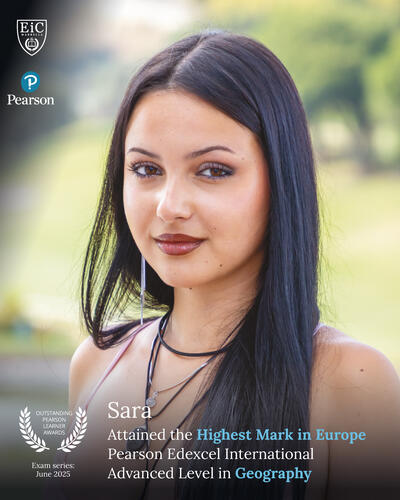
Tue Dec 16, 2025 | Sixth Form,Humanities
We are delighted to announce that Sara has attained the HIGHEST MARK IN EUROPE for the Pearson Edexcel…
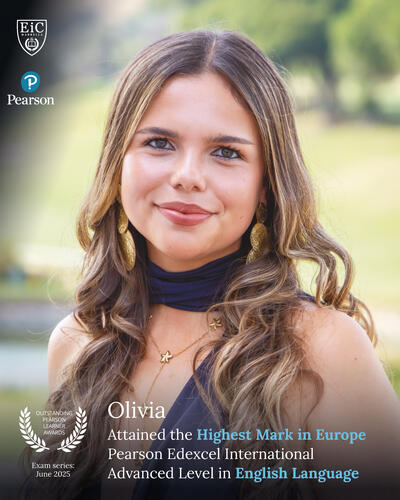
Tue Dec 16, 2025 | Sixth Form,English
We are delighted to announce that Olivia has attained the HIGHEST MARK IN EUROPE for the Pearson Edexcel…
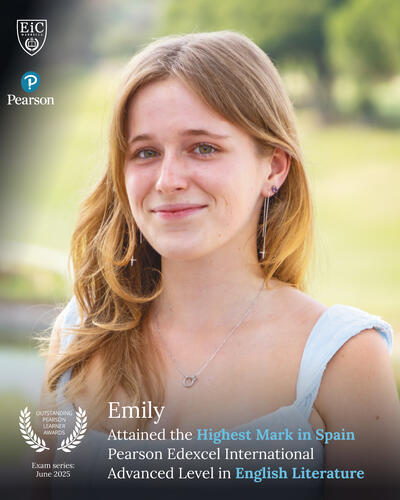
Mon Dec 15, 2025 | Sixth Form,English
We are delighted to announce that Emily has attained the highest mark in Spain for the Pearson Edexcel…
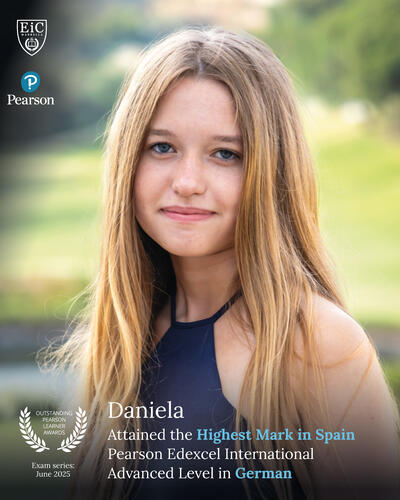
Mon Dec 15, 2025 | Sixth Form,MFL
We are delighted to announce that Daniela has attained the highest mark in Spain for the Pearson Edexcel…
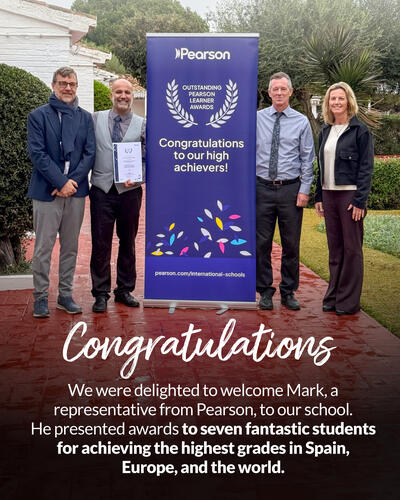
Fri Dec 12, 2025 | Sixth Form,KS4
We were delighted to welcome Mark Wilson, a representative from Pearson, to our school. He presented…
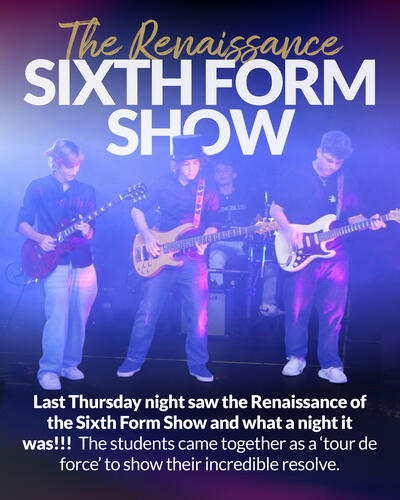
Thu Dec 11, 2025 | Sixth Form,Expressive Arts
Last Thursday night saw the Renaissance of the Sixth Form Show and what a night it was!!! The students…

Tue Nov 25, 2025 | Charity,Sixth Form
As part of Oscar’s half marathon fundraising campaign for children with Type One diabetes, Mr Willis…

Fri Nov 21, 2025 | Charity,Sixth Form
Christmas Appeal 2025 - A Week of Festive Giving! Supporting Cruz Roja The appeal starts Monday and…
EIC follows the English education system, culminating in the International Advanced Level (A Level) examinations which are required for entry into universities across the globe.
In Year 12 students are expected to take four academic options, from a wide range of subjects. Most of these subjects lead to the International Advanced Subsidiary Level (IAS) at the end of Year 12.
In addition all students participate in our Horizons programme (see below).
In Year 13, students would usually continue with three subjects to the final A Level. This is the requirement for entry to UK universities.
Physical Education is viewed as an important and integral part of the curriculum and, at EIC, we aim to promote physical activity and a healthy lifestyle. Therefore all students participate in PE throughout the Sixth Form.
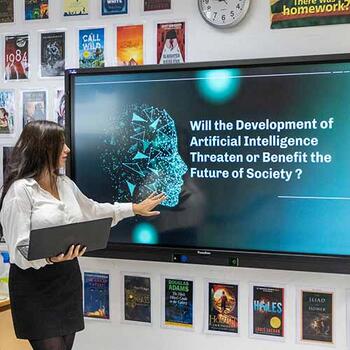
EPQ
Students choose one EPQ pathway (all equally weighted): Dissertation (5,000–6,000-word research project, preferred), Investigation/Field Study (primary data), Performance (practical skills to final show), or Artefact (tangible product).
Core skills: planning, research, development, evaluation, presentation.
Compulsory (esp. dissertation): Production Log, formal Evaluation, Presentation + Q&A. Graded A*- E (Pearson, internal assess/external moderate); UCAS points = AS Level.
The Pearson Level 3 Extended Project Qualification (EPQ) is a demanding and highly respected course designed to prepare Sixth Form students for the independent learning required at university and beyond. It gives students the opportunity to investigate a topic of personal interest in depth, whether linked to a future degree or career path, or driven by intellectual curiosity.
Through the EPQ, students develop key undergraduate-level skills, including independent research, academic reading, source evaluation, referencing, critical thinking, and extended academic writing, while learning how to avoid plagiarism. As a result, the qualification is viewed very favourably by universities and is often referenced positively in university applications and interviews.
The course typically begins at the start of Year 12. Students take part in taught seminar sessions covering areas such as research methods, ethical considerations, critical thinking, academic writing, and referencing. Alongside this, students attend regular one-to-one tutorials, where they receive personalised guidance, feedback, and support as they plan, research, and develop their project.
Some of the areas explored by recent students include:
As the EPQ involves sustained independent research and extended academic writing, students should have a secure grasp of written English. A good GCSE grade in subjects such as English or History is recommended. However, the most important qualities for success are motivation, curiosity, organisation, and the ability to manage a long-term project independently.
Due to its broad and flexible nature, the EPQ supports progression into a wide range of degree courses and career paths. Many universities, including members of the Russell Group, actively encourage applicants to undertake an EPQ, and some institutions may reference it in contextual offers or interviews. The qualification provides strong preparation for undergraduate study, particularly in terms of independent learning, academic writing, and research skills.
International A Level
Pearson Edexcel
AS Examinations:
UNIT 1: Lifestyle, Transport, Genes and Health
UNIT 2: Development, Plants and the Environment
UNIT 3: Practical Biology and Research Skills
A2 Examinations:
UNIT 4: The Natural Environment and Species Survival
UNIT 5: Energy, Exercise and Coordination
UNIT 6: Practical Biology and Investigative Skills
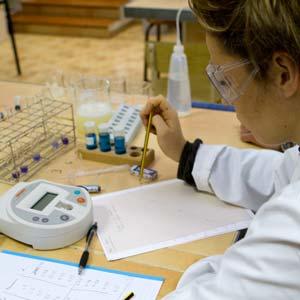
In the International A Level Biology course many of the ideas introduced at IGCSE level are explored in much greater depth. Aspects of human biology considered include cardiovascular disease, muscular and nervous control and co-ordination. These are interesting and relevant to students considering studying medicine.
Examples of other topics studied include human influences on climate, biodiversity, energy flow in ecosystems, and the biochemistry of photosynthesis. There is a strong practical emphasis throughout the course and students complete compulsory practicals in units 1,2,4 and 5.
In the context of this experimental work, students have a chance to improve their understanding of how practical investigations are planned and carried out and how the results they yield are recorded and interpreted.
During the course our students take a field trip to the National Park at Doñana where they have a chance to become acquainted with a region of international significance in terms of conservation.
Biology IGCSE or equivalent grade 7. It is useful but not essential to have studied Chemistry at IGCSE or equivalent.

International A Level
Pearson Edexcel
There are 2 exam papers at AS, one based on marketing and the other on basic business finance and management.
For the full A Level these 2 papers count for 50% of the marks, with another 2 papers for the other 50%.
One of these exam papers covers business strategy and decision making while the other focuses on global businesses.
In Business you will look at a number of different businesses facing different challenges. You are expected to analyse the key factors involved and have to recommend the best course of action for a business given its existing position:
Essentially the course is about decision-making in a business context and as such it develops invaluable skills whatever you want to do next. You need to learn and understand the theory but then apply it to a context. The “right” answer will depend on the problem in front of you and you need to be able to think issues through logically, put together well-reasoned arguments and make recommendations. It involves analysing situations and making choices.
There is some Maths involved in Business Studies, particularly in Year 13, so it is a requirement that all Business Studies students have at least a grade 7 in Maths IGCSE.
Student work ethic and dedication are also important factors, so all applicants are considered on a case-bycase basis.
Most students will go on to a Business-related degree. This might be something general, like Business Management, or more specific, like Marketing. Business is, by its nature, a vocationally useful subject and while some students may go on to a career in an area of a business, such as sales or promotion, there is a wide range of possibilities open to anyone with an understanding of how a business operates.

International A Level
Pearson Edexcel
AS Units:
Unit 1: The Core Principles of Chemistry
Unit 2: Applications of Core Principles of Chemistry
Unit 3: Chemistry Laboratory Skills I.
A2 Units:
Unit 4: General Principles of Chemistry I – Rates, Equilibria and Further Organic Chemistry
Unit 5: General Principles of Chemistry II – Transition Metals and Organic Nitrogen Chemistry
Unit 6: Chemistry Laboratory Skills II.
Chemistry affects the lives of every one of us.
Chemistry is an exciting and challenging subject to study as it helps to unravel the mysteries concerning materials of every description including the human body. The role of a chemist is a very important one in all aspects of our life. In fact we use very few materials that have not been changed in some way by a chemist. Chemical research may be targeted where it is dedicated to making new substances which are more effective, cheaper and with fewer disadvantages than those used at present, or fundamentally where it is designed to further our understanding of how and why things are as they are.
A grade 7 in Chemistry IGCSE or equivalent.
An A2 Level in Chemistry is essential for students wishing to go into the fields of:
It is a must for the fields of:
It is also extremely useful for careers in development of new materials in the fashion, fragrance and cosmetic industries, as well as in art restoration.

International A-Level
Cambridge
The full A Level Computer Science course is examined by the Cambridge International Examination board.
It consists of four units, all of an equal weighting and all written papers. The course is modular in design, Papers 1 and 2 being examined at the end of Year 12, Papers 3 and 4 being examined at the end of Year 13.
We all take the internet, email, everyday applications and computer games for granted, but at some point someone who studied Computer Science had a hand in creating them. All around us is evidence of expertise in computing, not just in terms of how computers and programming work but the higher-level analytical skills required.
The course will suit students who are logical and who have an analytical approach to problem solving. It is excellent preparation for students looking to take a Computer Science or computing related degree. If you would like a career as a programmer, computer engineer and would like to work in the telecommunications industry, then this course is appropriate. Students from this course have gone on to gain places at Oxbridge and other top Russell Group universities. Importantly, because of the focus on logic, systematic analysis and problem-solving, students with qualifications in computing are highly regarded by employers and universities alike.
This course not only gives you the opportunity to gain a top grade but enhances your personal skills in problem solving, critical analysis, working both independently and as part of a team to achieve solutions. What will you learn? You will gain an in-depth knowledge and understanding of how computers work, from the microprocessor to memory, storage, operating systems and network architectures.
You will develop knowledge of programming theory and acquire practical skills in developing software programs. Programming will include a study of VB Net, Python, HTML, CSS, Javascript and SQL.
This is a demanding A Level subject which has certain prerequisites. A minimum of a 7 grade in IGCSE Mathematics is essential. Obviously a grade 7 in Computer Science or ICT at IGCSE is advisable, but not essential. Indeed studying Mathematics at AS Level is also advisable. The overriding essential is an interest in the subject and a desire to learn more, with a goal to achieving a high grade at A Level.

A Level
Pearson Edexcel
Component 1: Practical performance & Portfolio of 2500-3000 words (80 marks).
Component 2: Two practical performances: 1 monologue or duologue and 1 group performance - external examiner (60 marks).
Component 3: Written paper - 2 hours 30 minutes (80 marks)
The A-Level course will involve taking part in drama performances and exploring theatre practitioners and performance texts. You will extend your ability to create drama and theatre, either in a performing or production role. You will also be required to write about the dramatic process of devising, how drama can go from page to stage and to develop your powers of analysis to become an informed critic.
COMPONENT 1: DEVISING (40%)
You will devise an original performance piece using a play text and theatre practitioner as stimuli. You will be assessed on a written portfolio (2500- 3000 words).
COMPONENT 2: TEXT IN PERFORMANCE (20%)
You will perform in a group performance of one key extract from a play text as well as a monologue or duologue to an external examiner. This exam is practical and does not involve coursework .
COMPONENT 3: THEATRE MAKERS IN PRACTICE (40%)
This is an externally assessed 2 hour and 30 minute written paper in three sections. In section A you will be required to analyse and evaluate a live theatre performance you have seen. In section B you will answer two questions based on an unseen extract from one of the play texts you have studied. In section C you will answer one question based on an unseen section from your second chosen play text.
Please note this is a 2 year linear A Level course with no AS Level option.
You will have achieved a grade 7, 8 or 9 at GCSE Drama and IGCSE English Literature or Language and have a good level of spoken English. You must be interested in gaining a greater understanding of how theatre and plays work as a performer, designer and director and that you are confident to perform on stage as a group as well as individually.
Trips - you will be required to go on theatre trips to see English-speaking theatre.
This A Level can lead to further study in Drama, Theatre Studies and Performing Arts in Higher Education at degree level. It can be used as part of your course to broaden your studies and collaboration and communication skills and may lead to a career in the performing arts industries, media arts, journalism and teaching.
Drama and Theatre Studies A Level complements a range of subjects such as English Literature, Art and Design, Sociology and is useful in developnig analytical and critical thinking skills building confidence and improving presentation skills required for a range of careers.
International A-Level
Pearson Edexcel
There are 2 papers at AS (Year 12), 1 covering microeconomics & the other macroeconomics.
The AS counts as 50% of the full A Level.
There are another 2 papers for the full A Level (Year 13), again covering microeconomics & macroeconomics.
A Level Economics covers microeconomics, which deals with the behavior of individuals and firms in the marketplace, and macroeconomics, which looks at the economy as a whole and covers national economic performance, international trade, and economic policy. Students learn about economic theory and concepts such as supply and demand, market structures, elasticity, circular flow, and the impact of government policy. This means that students need to examine current economic issues, such as unemployment, inflation, and trade deficits. Students will also learn how to analyse data, use economic models, and make informed decisions.
Economics looks at how decisions are made, so when you go to a cafe to buy a coffee an economists sees you and Starbucks involved in a game, each trying to get what you want: you want a good quality, low priced cup of coffee, they want profit. Economics explains how this game works and the effect it has on other people, like the sellers of the coffee or the employees at Starbucks.
Economics differs from Business in a number of ways. Firstly, Business Studies examines issues from the perspective of the business owner, looking at issues like pay or marketing. Economics looks ‘from the outside’, looking at how businesses, consumers, workers and governments are likely to react to changes in economic conditions. This means a lot of economics is about forecasting - Will Bitcoin fall in price? Will inflation in the UK fall? To do this Economics creates models to show how individual markets or a national economy work and then manipulates these models to predict outcomes.
We insist that only those students taking Maths A Level should consider Economics. Having an interest in current affairs is also important, as are essay writing skills, and students who study History, Politics or Geography will find parts of Economics familiar.
There are a wide range of degree and career opportunities for students of Economics, as mathematicians with the ability to use this to provide a qualitative analysis, they are highly regarded. Many go on to degrees in Economics or on Economics-related courses, such as Management. Others go on to International Relations or other contemporary courses. For careers, most obviously there is the financial sector, be it in investment banking, accountancy or risk analysis. Other areas include the diplomatic service, law or journalism.

International A Level
Pearson Edexcel
AS Level:
Unit 1: Examination - 2 hours
Worth 50% of final AS Level grade
Worth 25% of final A Level grade
Unit 2: Examination - 2 hours
Worth 50% of final AS Level grade
Worth 25% of final A Level grade
A Level:
Unit 3: Examination - 2 hours
Worth 25% of final A Level grade
Unit 4: Examination - 2 hours
Worth 25% of final A Level grade
Pearson Edexcel International A Level English Literature provides students with the opportunity to gain further knowledge and understanding of international poetry, prose and drama, with candidates studying all genres at both AS and A Level.
A wide range of inspiring set texts offer a depth and breadth of literary study and encourage lively and stimulating classroom discussion. At AS Level, learners will study a selection of modern poetry, a modern prose text and two plays. At A Level they will study four further set texts and will also prepare for unseen poetry. All examinations are open book, and students are presented with general essay questions on theme and character that require the student to make whole-text links. Throughout the AS and A Level course, students will be encouraged to read widely and independently, engaging critically and creatively with a substantial body of texts. They will develop and apply their knowledge of literary analysis and evaluation, exploring the contexts and others’ interpretations of texts. This rigorous course allows students to deepen their understanding of English literature, including its changing traditions.
You will have achieved an 7, 8 or 9 grade in IGCSE Literature in English
You must also:
An A Level in Literature in English reflects good communication skills and a wide cultural knowledge: skills that are important for whatever degree or career you choose.
English Literature can be studied as a single subject at degree level or combined with a wide variety of other subjects. Philosophy, Anthropology, Archaeology, Classics, Politics, History, Law or Languages all combine well with the study of English Literature.

International A Level
Pearson Edexcel
AS Level:
Unit 1: Examination - 1 hr 45 minutes
Worth 50% of final AS Level grade
Worth 25% of final A Level grade
Unit 2: Examination - 1 hr 45 minutes
Worth 50% of final AS Level grade
Worth 25% of final A Level grade
A Level:
Unit 3: Examination - 2 hours
Worth 25% of final A Level grade
Unit 4: Examination - 2 hours
Worth 25% of final A Level grade
Pearson Edexcel International AS Level English Language provides students with opportunities to make critical and informed responses to a wide range of texts. Students will also demonstrate their ability to produce writing to specific briefs and for given audiences. Unit 1 focuses on the context in which language is produced and received and how writers and speakers present themselves to their audience. Unit 2 looks at language in transition. Students will study the influence of other languages on the development of English, pidgins and creoles and the development of English outside the British Isles.
Pearson Edexcel International A Level English Language enables students to develop their skills as producers and interpreters of language. Unit 3 allows students to study a range of specified writing genres and demonstrate their skills as writers in re-creating texts for a different context, purpose and audience. In Unit 4, students select one of four topics to research to undertake a focused investigation of their selected topic.
You will have achieved a grade 7 - 9 in IGCSE English Language.
You must also:
This course will lead to (degree/careers)
In studying English Language at A Level, you develop your skills as a communicator. This is particularly useful, whichever degree course or career you decide to follow.
It forms a good foundation for study in any arts-based degree in combination with, for example, History, Social Studies, Media Studies, Foreign Languages and Politics.

A Level Linear 2 Year Course
Edexcel Fine Art (9FAO)
Component 1. Personal Investigation. Internally Set. 60% of the overall marks.
Component 2. Externally Set Assignment. Set by Edexcel. 40% of the overall marks.
Students must adhere to the assessment objectives for the course:
*These are the assessment objectives for the course.
Fine Art incorporates the exploration of practical and critical/contextual work through a range of processes and media. The disciplines are painting and drawing, printmaking, sculpture, lens-based image making.
Students should also:
In order to be able to make a strong start at this level, a 7, 8 or 9 must be achieved at GCSE Level (equivalent to the old A or A*). However, exceptions are sometimes made and we will accept a 6 (B) where we see true potential in someone. Rarely, but entirely possible, is to embark on the A Level Fine Art course without having completed a GCSE in it, but this possibility is reserved for extremely gifted and talented students who, after internal assessment, show that they are at the required level.
Having an A Level in any endorsement of Art and Design can lead to degrees and careers as a:

International A Level
Pearson Edexcel
IAS
Unit 1: Spoken expression and response. 30% of the total IAS. 15% of the total IAL.
Unit 2: Understanding and written response. 70% of the total IAS. 35% of the total IAL.
IA2
Unit 3: Understanding and spoken response. 15% of the total IAL.
Unit 4: Research, understanding and written response. 35% of the total IAL.
All units are externally assessed.
The content covers the following general topic areas (GTAs):
IAS • Youth matters • Lifestyle, health and fitness • Environment and travel • Education and employment.
IAL • Youth matters • Lifestyle, health and fitness • Environment and travel • Education and employment • Technology in the French-speaking world • Society in the French-speaking world • Ethics in the French-speaking world.
Unit 1: Spoken expression and response
Section A: Spoken response – Respond to four Pearson-set questions on a stimulus related to one of the student’s two chosen general topic areas (GTAs).
Section B: Discussion – A discussion relating to the GTA.
Unit 2: Understanding and written response
Section A: Listening.
Section B: Reading and Grammar.
Section C: Writing – requires students to write an email or article of a recommended length of 240–280 words in French based on a short, printed stimulus written in French and four related bullet points.
Unit 3: Understanding and spoken response
Section A: Presentation and Debate.
Section B: Discussion.
Unit 4: Research, understanding and written response
Section A: Listening.
Section B: Reading and Grammar.
Section C: Writing – Requires students to answer one question, in French, from a choice of two, that relates to a literary text chosen from the prescribed list. Students should write 300-400 words.
You should have achieved a grade 9 in your IGCSE examination and have a solid knowledge of the foundations of the language, both in speaking and writing, as well as a genuine interest in learning it. You should also keep up to date with current affairs in the countries where the language is spoken.
As well as specialising in the study of the language itself, you can combine the language with many other specialist subjects. A language will be an enrichment to any career and will open doors. In an even more globalised world, the need for linguists is constantly increasing and appealing to a huge variety of employers.
Some popular combinations in the past have been:

International A Level
Pearson Edexcel
AS level:
Unit 1- 1 hour 45 min
Unit 2- 1 hour 30 min
A2 Level:
Unit 3- 2 hours
Unit 4- 1 hour 30 min
Geography lies at the junction between Science, Maths and the Humanities. It is regarded as a facilitating subject and is often considered as a Science by Universities. This means it works well with almost any combination of subjects. It shows that those who go the Science route can write and communicate effectively and that those that take the Arts / Languages / Humanities route can understand enough science and data to analyze and navigate our increasingly complex world. It mixes current affairs, critical analysis and how to interpret world systems, both political and cultural as well as biodiversity and natural disasters.
At AS level the course is divided into two units which cover both human and physical (natural hazards and the human response to this). There is a compulsory field trip that takes place in the first term of Year 12.
For the A2 level the course consists of topics on Energy, Superpowers, Biodiversity and Atmospherics. There is also a six week research topic on a choice of Tectonics, Human response to disease, Culture or Food production.
Generally the requirement is a 7 or above at IGCSE. If you have not taken Geography at IGCSE you can still be considered for the course on a case by case basis. Student work ethic and dedication are also important factors, so all applicants are considered on a case-by-case basis.
Geography is regarded as a facilitating subject. It provides employers with evidence that you can deal with many different aspects of a job. Potential careers are as diverse as Environmental Engineer, Petroleum Geologist, Oceanographer or Disease prevention specialist to Journalism, Film and Documentary production, International relations, Law or Political analyst.

International A Level
Pearson Edexcel
IAS
Unit 1: Spoken expression and response. 30% of the total IAS. 15% of the total IAL.
Unit 2: Understanding and written response. 70% of the total IAS. 35% of the total IAL.
IA2
Unit 3: Understanding and spoken response. 15% of the total IAL.
Unit 4: Research, understanding and written response. 35% of the total IAL.
All units are externally assessed
The content covers the following general topic areas (GTAs):
IAS • Youth matters • Lifestyle, health and fitness • Environment and travel • Education and employment.
IAL • Youth matters • Lifestyle, health and fitness • Environment and travel • Education and employment • Technology in the German-speaking world • Society in the Germanspeaking world • Ethics in the German-speaking world.
Unit 1: Spoken expression and response.
Section A: Spoken response – Respond to four Pearson-set questions on a stimulus related to one of the student’s two chosen general topic areas (GTAs).
Section B: Discussion – A discussion relating to the GTA.
Unit 2: Understanding and written response.
Section A: Listening.
Section B: Reading and Grammar.
Section C: Writing – Requires students to write an email or article of a recommended length of 240–280 words in German based on a short, printed stimulus written in German and four related bullet points.
Unit 3: Understanding and spoken response
Section A: Presentation and debate.
Section B: Discussion.
Unit 4: Research, understanding and written response
Section A: Listening.
Section B: Reading and Grammar.
Section C: Writing – Requires students to answer one question, in German, from a choice of two, that relates to a literary text chosen from the prescribed list. Students should write 300-400 words.
You should have achieved a grade 9 in your IGCSE examination and have a solid knowledge of the foundations of the language, both in speaking and writing, as well as a genuine interest in learning it. You should also keep up to date with current affairs in the countries where the language is spoken.
As well as specialising in the study of the language itself, you can combine the language with many other specialist subjects. A language will be an enrichment to any career and will open doors. In an even more globalised world, the need for linguists is constantly increasing and appealing to a huge variety of employers.
Some popular combinations in the past have been:
International A Level
Pearson Edexcel
Paper 1
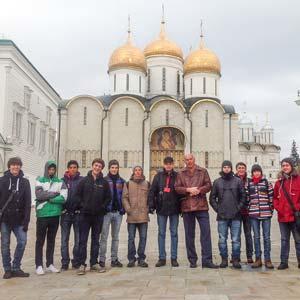
1B: Russia in revolution 1881-1917
Paper 2
2B: China 1900-1976
Paper 3
3C: Germany 1871-1990
Paper 4
4D: South East Asia 1945-1990
Paper 1
1B: Russia in revolution 1881-1917 • Political Reaction and Economic Change -Alexander III and Nicholas II 1881-1903 • The First Revolution and it’s impact 1903–1914 • The end of Romanov rule, 1914–17 • The Bolshevik Seizure of Power October 1917.
Paper 2
2B: China 1900-1976 • Order and disorder 1900-1976 • The Impact of the World on China 1900-76 • Economic Changes 1900-76 • Social and Cultural Changes 1900-76.
Paper 3
3C: Germany 1871-1990, united, divided and reunited (forbidden combination with Germany on Paper 1).
Paper 4
4D: South East Asia 1945-1990 • What explains the outbreak, course and impact of the Korean War in the period 1950-53? • The Emergence of the Cold War in South East Asia 1945-60 • War in Indo-China 1961-1973 • South East Asia without the West: the fading of the Cold War 1973-1990.
Students should have a strong portfolio of IGCSEs (5 or above) including a grade of 9 - 7 in either History or another essay based qualification, for example, English Literature.
History is very practical, because it involves:
All these skills are valuable in a whole range of jobs.
Nicky Campbell and Simon Mayo are History Graduates. The BBC foreign affairs correspondent Jeremy Bowen did the same from University College London. Other famous graduates in the media include comedian Sacha Baron Cohen, aka Ali G and Melvyn Bragg, who both graduated from Oxford.
International A Level
Pearson Edexcel
AS Qualification (Year 12)
Maths - P1, P2 and M1/S1 (all 1.5 hours)
Further Maths - F1, M1 & M2 (all 1.5 hours)
A2 Qualification (Year 13)
Maths - P3, P4 & D1 (all 1.5 hours)
Further Maths - F2, M3 & S2 (all 1.5 hours)
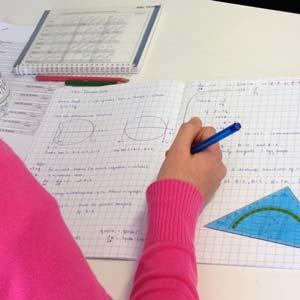
Mathematics lies at the intersection of the arts and the sciences. The International A Level course is extremely versatile and useful because of it’s in built problem solving capabilities – both universities and future employers find this aspect invaluable.
It can be combined with a range of other A Level subjects; beyond the obvious combinations of Maths and Sciences, or Maths and Economics, in recent years students have also studied Maths in conjunction with English, Art, Humanities and Languages A Levels. Equally, it can be studied for its own sake - just for the joy of it!
Our guidelines would be a grade 7 at IGCSE for Maths, and at least a high grade 8 at IGCSE for Further Maths. Student work ethic and dedication are also important factors, so all applicants would be considered on a case-by- case basis.
Although Maths & Further Maths have an obvious link to degrees such as Engineering, Science, and Finance, it is a facilitating subject that is viewed equally highly in degrees such as Law and Psychology. Universities understand the difficulty of the A Level, and appreciate the fact that it teaches problem solving, persistence and lateral thinking.
International A Level
Pearson Edexcel
AS Units:
A2 Units:
The course aims to:
Physics IGCSE or equivalent grade 7.
Students are recommended to take A Level Mathematics.
It is useful but not essential to have studied Chemistry at IGCSE level or equivalent.
Physics at A Level is a facilitating subject and your qualifications can open up the possibility of innovating and exciting work in areas such as aerospace, engineering, computing, technological innovation, scientific journalism, telecommunications, consultancy, administration or electronics. You might like to work in environments such as hospitals, research laboratories, agricultural establishments, classrooms, oil industries or the Civil Service.
A Level
Pearson Edexcel
This is one of the new ‘linear’ A Levels with no AS exam. The course is examined at the end of Year 13 for the full A level.
The A Level has three papers:
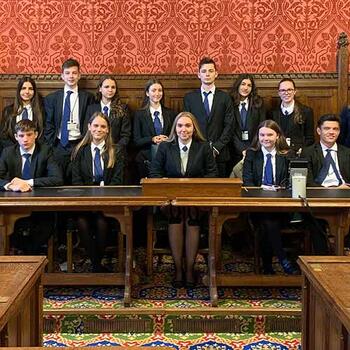
The study of politics will help you understand the massive influence political decisions, structures and ideologies have on our daily lives. Recent years in the UK have seen a referendum, a general election, Brexit & the Supreme Court intervention, while in the US there have been Presidential & Congressional elections & impeachment of the President. Politics helps you to understand these events, why they occurred, the reactions to them and the possible consequences.
If you have an interest in current affairs, this subject is vital to improve your understanding. It is a subject where much of the textbook is out of date by the time it is printed, with new events and examples appearing all the time. The course will help you examine your own views and see the range of differing ideologies. In this way it will help you define and refine your own opinions and express them with clarity.
This subject is not offered at IGCSE so entry will be considered on a case-by-case basis, however, as a essay based subject, a grade 7 or higher in History and English Literature are necessary with a correspondingly high grade in English Language (independent of course work). You should also have a real interest and knowledge of UK & US politics today. AS and A Level Politics combines well with other subjects, most notably essay writing subjects, such as History, English and Modern Foreign Languages, and subjects with a strong current affairs element, such as Economics and Geography.
Politics is useful in its own right, making you a more informed and involved citizen. As an analytical subject students may go on to study subjects such as Politics, History, International Relations or PPE. Often Politics students become actively involved in student politics while at university. Careers might include law, journalism, any role in business which requires you to analyse and use information and, of course, future Prime Minister!
International A Level
Pearson Edexcel
AS Qualification (Year 12):
Unit 1: Social and Cognitive psychology (1.5 hours)
Unit 2: Biological psychology, learning theories and development (2 hours)
A2 Qualification (Year 13):
Unit 3: Applications of psychology (1.5 hours)
Unit 4: Clinical psychology and psychological skills (2 hours)
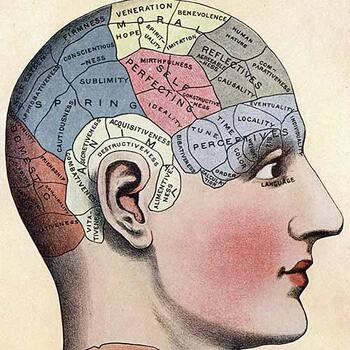
Psychology is the scientific study of the mind and behaviour. The International A-Level course provides an introduction to the key areas of the subject.
It explores issues such as:
This rigorous course provides a nice mixture of scientific investigation (including four big practical reports) and scientific essays involving weighing up evidence on a topic. There is even a little bit of maths. As such, this broad course will appeal to a wide range of students, but particularly those who enjoy reading, writing and thinking about scientific (particularly biological) ideas.
Students often come to Psychology with misconceptions about what the subject is and what it involves. It is a demanding, scientific course that, like all A-Levels, requires good organisational skills, a high level of interest and a keenness to read further into topics.
A curious mind and an ability to weigh up both sides of an argument. The course requires an ability think critically and express yourself clearly in writing.
Being such a broad subject, Psychology overlaps with many fields. An understanding of psychology gained through this course will be useful for many degrees, including Psychology, Biology, Neuroscience, Education, Economics, Business and Marketing, Sport and Exercise Science, Philosophy, Politics, Health Sciences, Nursing, Law, Criminology and Sociology.
At university level, in some cases there is the possibility to combine study of psychology with another subject.

International A Level
Cambridge
IAS
Paper 1 - Socialisation, identity and methods of research
50% of the AS Level 25% of the A Level
Paper 2 - The Family
50% of the AS Level 25% of the A Level
IAL
Paper 3 - Education
20% of the A Level
Paper 4 - Globalisation, Media
and Religion
30% of the A Level
Sociology is the study of human behaviour and the interaction between human groups and institutions. The debate about how much we can reshape society is central to the subject, but in order to do that you need to have an idea about how people function. It encourages learners to think critically about contemporary social, cultural and political issues and to consider these from different perspectives. It provides opportunities to explore key concepts and debates that underpin society and to develop the skills of interpretation, application, analysis and evaluation while studying a range of stimulating topics and real-world issues.
At IAS the course is divided into two papers covering topics such as social identity, diversity, social change and gender equality.
At IAL the course has two papers that cover education and social mobility as well as globalisation, media and religion.
This subject is not offered at IGCSE so entry will be considered on a case-by-case basis. It is an essay based subject. so good English skills are necessary. Sociology combines well with other subjects, most notably essay writing subjects, such as History, English and Modern Foreign Languages, and subjects with a strong current affairs element, such as Economics and Geography. However, it can also work well as an essay based subject to complement Mathematics and Science based subjects.
Sociology is regarded as a desirable subject by many top Universities, as it requires critical thinking skills and an analytical mindset. It can lead to many different career paths such as Law, Criminology, Banking, Education, Social Work, Social Policy, Politics, Journalism or International Relations.

International A Level
Pearson Edexcel
IAS
Unit 1: Spoken expression and response. 30% of the total IAS. 15% of the total IAL.
Unit 2: Understanding and written response. 70% of the total IAS. 35% of the total IAL.
IA2
Unit 3: Understanding and spoken response. 15% of the total IAL.
Unit 4: Research, understanding and written response. 35% of the total IAL.
All units are externally assessed.
The content covers the following general topic areas (GTAs):
IAS • Youth matters • Lifestyle, health and fitness • Environment and travel • Education and employment .
IAL • Youth matters • Lifestyle, health and fitness • Environment and travel • Education and employment • Technology in the Spanish-speaking world • Society in the Spanish-speaking world • Ethics in the Spanish-speaking world.
Unit 1: Spoken expression and response.
Section A: Spoken response – Respond to four Pearson-set questions on a stimulus related to one of the student’s two chosen general topic areas (GTAs).
Section B: Discussion – A discussion relating to the GTA.
Unit 2: Understanding and written response.
Section A: Listening.
Section B: Reading and Grammar.
Section C: Writing – Requires students to write an email or article of a recommended length of 240–280 words in Spanish based on a short, printed stimulus written in Spanish and four related bullet points.
Unit 3: Understanding and spoken response
Section A: Presentation and debate.
Section B: Discussion.
Unit 4: Research, understanding and written response
Section A: Listening.
Section B: Reading and Grammar.
Section C: Writing – Requires students to answer one question, in Spanish, from a choice of two, that relates to a literary text chosen from the prescribed list. Students should write 300-400 words.
You should have achieved a grade 9 in your IGCSE examination and have a solid knowledge of the foundations of the language, both in speaking and writing, as well as a genuine interest in learning it. You should also keep up to date with current affairs in the countries where the language is spoken.
As well as specialising in the study of the language itself, you can combine the language with many other specialist subjects. A language will be an enrichment to any career and will open doors. In an even more globalised world, the need for linguists is constantly increasing and appealing to a huge variety of employers.
Some popular combinations in the past have been:
Our success at placing EIC students in top universities is always a cause for celebration, both at Speech Day and in our annual ‘Roll of Honour’. This success is a result of many school strategies, including Horizons, which complement EIC’s rigorous academic curriculum. Top universities have advised us that students should be widely read – they should enjoy reading for its own sake. They should have gone beyond their A Level syllabuses – they should be familiar with the history, and the key thinkers, of their chosen subjects. They should be serious-minded young adults and should be prepared to take the lead in interviews.
Therefore, our course has the following aims:
Students should aspire to be widely read. They should be familiar with key-thinkers, events or innovations. Eventually, students should be prepared for university in the wider sense, including the aspiration to speak or debate in public, or lead a tutorial. They should be able to communicate their enthusiasm, a project or commitment they are proud of and to respond with maturity. Moreover, Horizons students will listen critically to others.
This is an ambitious course credited by the ‘Horizons Diploma’; however, the world is looking for independent, critical thinkers!
We have showcased the Horizons Department and our school’s talents in recent years; we have taken part in Debating Championships at home and around the world: Mexico City, The Hague, Bucharest and Prague. We have reached five world finals in the past six years, and were World Debating Champions (2016 and 2017). We are currently European Winston Churchill “Young Leaders” Debating Champions, which EIC won in Bucharest.

EIC Sixth Formers actively participate in charity events and are active members of the school community. For example:

All of our Sixth Form students go on to continue their studies at university, often at some of the world’s most prestigious institutions.
Most of our students choose to go to UK universities, including the University of Oxford, University of Cambridge, Imperial College, London School of Economics and a range of other Russell Group universities. However, A Levels also allow our students to enter universities worldwide and in recent years we have had students go on to study in the USA (including Yale, NYU and UCLA), Spain, The Netherlands, Ireland, France, Hong Kong and Switzerland.
Our success in helping these students achieve their university dreams is a result of individualised help and advice in the application procedures, together with the strong academic success and additional activities, be it in Horizons or the local community, which helps EIC students stand out from the crowd.

As the Sixth Formers graduate and move into the wider world the English International College looks to retain it's strong bonds with students through the EIC Alumni Association. It's main objective is to foster relationships among the alumni and the EIC community as a whole through regular formal and informal events in London, and beyond. This results in networks that share a common purpose in preserving and promoting EIC's unique ethos and culture. Moreover, a platform to share and celebrate the school’s extraordinary success.

Alumni Events - Saturday 16th May, EIC and Saturday 6th June, London. | RSVP Here
We recognize the importance of choosing the right school for your family and we are here to help. Please take the time to read through the Admissions pages to familiarise yourself with the admissions process, but don't hesitate to contact us if you have questions.
When you are ready please visit the Making an Enquiry page to begin the process of joining us.


© 2026 The English International College
page load: (0.1162 s)
Website by: The English International College


